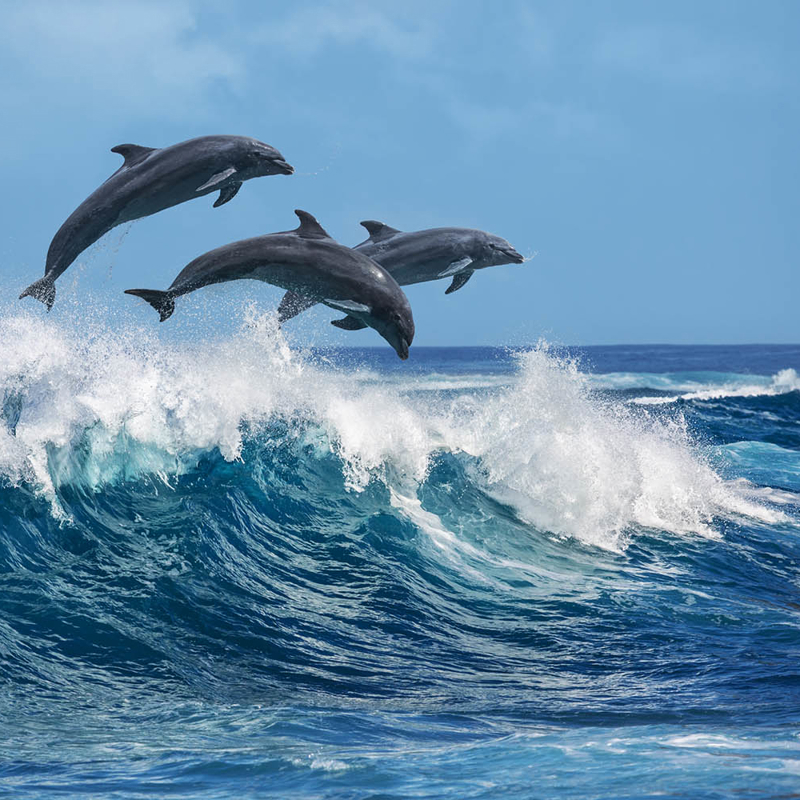

Meet Grace - Protected Species Observer (PSO)
Switching from aquariums to protecting species offshore
Grace DeLeon started out working in aquariums before becoming a PSO and PAM operator. She's now been in this role for almost 10 years. Find out how she got into the swing of PSO work, and why she loves being a PSO. She shares her advice for working in small teams (and sometimes small spaces), as well as making lifelong friendships!
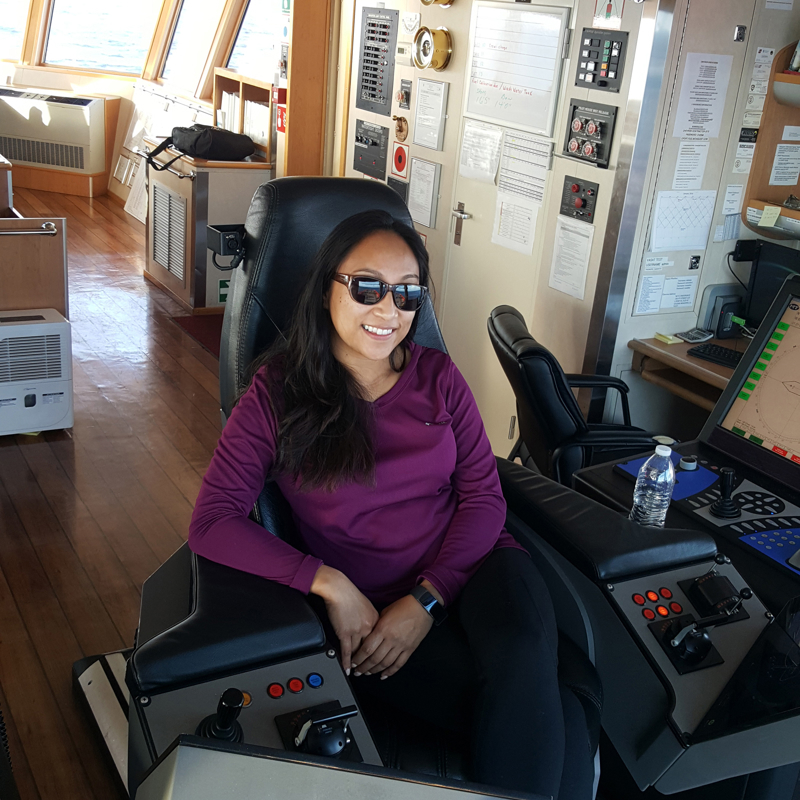
Q Grace, what first got you interested in PSO work?
I actually have a background in aquatics. My first job was as a biologist at the Florida Aquarium. Moving to Houston, I took care of the aquariums at the Rainforest Café. Then I came across the job of PSO, which I hadn’t known existed. I happened to be in an energy-focussed area of the country, and this was an environmental job I found online.
Q Do you have any stories about your training?
Thankfully, everything has been very easy when I've done all my trainings. I actually got the chance to do my BOSIET (Basic Offshore Safety Induction and Emergency Training) at NASA [sadly, the center is now closed to external trainings]. That was awesome. I think we just missed an astronaut from the day before, but we could see the simulation of the International Space Station underwater.
Q What was your first impression of PSO and PAM work, almost 10 years ago?
It was overwhelming to begin with. I didn’t know anybody on my training but I think most people already knew each other or were already doing the work. I still had a full-time job, so I waited until some of the people I trained with came back so I could find out what would happen from them. Once I got there, I was fortunate to go onto one of the best boats at the time. I had an awesome [team] lead and other PSO support I've now been really close friends with for years.
We didn't have any detections [using PAM - Passive Acoustic Monitoring of marine mammals] on my very first rotation, so I couldn't do that aspect of it. It was only visual, but just to get that experience was pretty amazing. It was like, yeah, this is something I want to do!
Q Your job can involve working in small teams and small spaces offshore. How have you found that?
I can manage it pretty well. I haven’t had to do any packed cabin sharing. The most I’ve had was three people in a room (two females and a male, with a total of eight people on the boat). We felt comfortable enough with each other at that point. It worked because it was professional, we understood each other and we had met each other ahead of time.
I can handle small spaces for the most part, depending on the team. We just need to get on the right page – it’s important to know each other and meet beforehand. But again, fortunately I haven't had to do too many of those.
Q What do you love most about your job?
Definitely the people. We might never meet in person, or we work with people once and don't see them again for five or ten years, but we keep in contact. You have this close connection.
I love that I'm doing something that I went to school for, because a lot of people don't get to do that. It’s also unique; we’re trying to make a difference. My degree translated into something that helps the world as a whole.
The experience is unique too. It can be like a mini vacation away from home. It’s something I still want to do.
We're trying to learn, mitigate [impact on protected species] and do the best we can.
Q What is one small thing that people at home can do to help the environment?
Recycling. That's something everybody can do and it becomes a simple part of your everyday life. I educate all my friends and family to recycle and I think it's working.
Q What would you say is your biggest impact on the planet?
Oil [as a fuel] isn't going away anytime soon. We're trying to learn, mitigate [impacts] and do the best that we can. It's nice to see that clients are more or less on the same page now, especially for the past decade. They understand that they don't want to leave a bigger impact in the future.
Q Do you have any tips for anybody looking to become a PSO?
You need to realize that you're going to be away from home. Also, the biggest thing people don't realize is about the schedule. You might be told a project is days or weeks and it turns into something else – things change all the time. You’re doing something pretty special, but it can involve sacrifices for you and your family and friends.
Next, learn what to pack. I always ask about the actual project, but also about what kind of plugs and adapters to bring. And should you bring any snacks, or vitamins, etc? Especially on the smaller boats.
Q How do the relationships you mention get formed on boats?
We’re all there for the same reason. We're all biologists who care about the animals and the environments. You learn to live together every single day, so you don't even think about it. Then you start writing each other, “Come visit me!” We already have a common bond, then we all go through the same things. We also often have similar demeanours and ideas, and I think that helps.
Interested in applying? Or want to ask a question?
We're always interested in hearing from new shipmates! Our US team are currently hiring: We welcome new and experienced applicants that are able to work in the United States. New candidates should have a biological sciences background, as well as that all-important sense of adventure!
If you'd like to get in touch, contact us at RPS.NAMPSOTEAM@tetratech.com